
The digital entertainment landscape is undergoing a significant transformation. What once separated video games from gambling is now becoming increasingly difficult to distinguish. Platforms inspired by Roblox gamble sites have introduced mechanics that go beyond traditional play, incorporating chance-based systems, virtual economies, and reward-driven engagement. As a result, gaming is evolving into a hybrid model where entertainment and betting concepts overlap.
The Rise of Chance-Based Mechanics in Games
Modern video games are no longer limited to skill-based progression. Many now include features such as loot boxes, randomized rewards, and in-game currencies that introduce elements of chance. Players may spend virtual or real money for an opportunity to obtain rare items, skins, or upgrades.
In Roblox-style environments, where user-generated content thrives, some games incorporate systems that closely resemble betting. Players can risk in-game assets or currency in exchange for the possibility of receiving items with higher perceived value.
The appeal lies in unpredictability. Just like spinning a roulette wheel or drawing a card, the outcome is uncertain, making each attempt exciting and engaging.
Virtual Economies and Digital Value
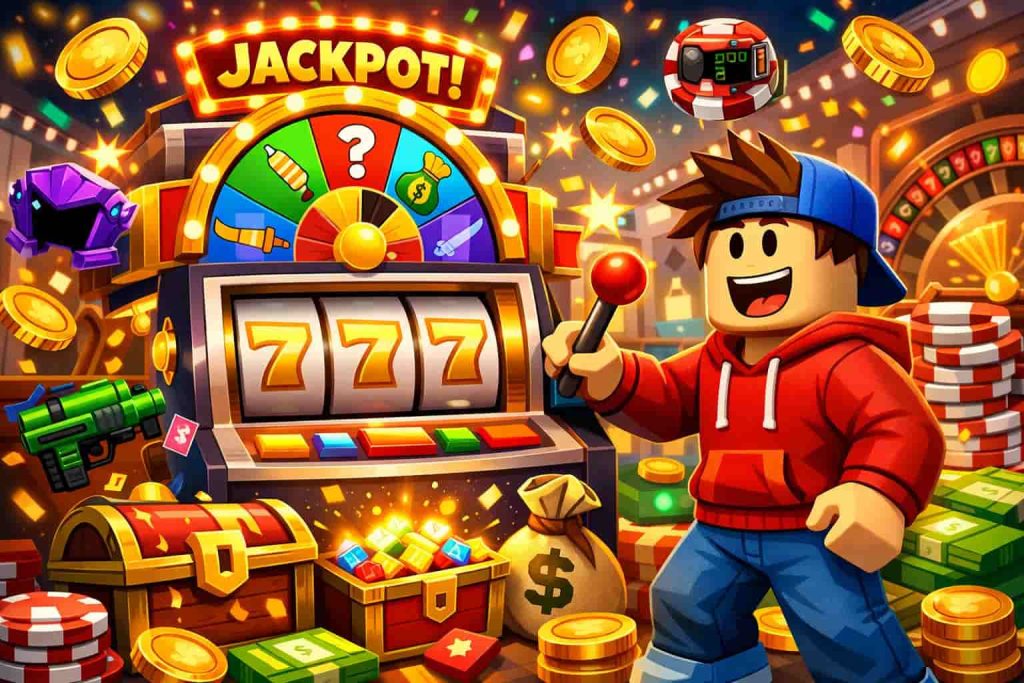
A key factor driving this convergence is the emergence of virtual economies. In many games, digital items hold real or perceived value, especially when they can be traded, sold, or exchanged within a marketplace.
Roblox-style platforms amplify this effect by allowing players to create, buy, and trade items. When these items become tied to randomized systems, the stakes increase. Players are no longer just playing for fun, they are participating in an economy where outcomes can impact their digital wealth.
This creates a dynamic like gambling environments, where participants weigh risk against potential reward. The difference is that instead of cash, players often use virtual currencies, though these can sometimes be indirectly converted into real-world value.
Borrowing from Casinos
Game developers are using designs that are focused on engagement with strong resemblance found in casinos. These include visual effects, sound cues, reward animations, and near-miss scenarios that encourage continued play.
For example, opening a loot box may involve bright colors, suspenseful timing, and celebratory effects when a rare item appears. These elements are carefully designed to trigger anticipation and excitement, reinforcing player behavior.
The result is a feedback loop where players are motivated to continue engaging, often without fully considering the probabilities involved.
Ethical Concerns and Player Protection
As these mechanics become more common, concerns around ethics and player protection have grown. One of the primary issues is exposure, particularly among younger players who may not fully understand the risks associated with chance-based systems.
Critics argue that introducing gambling-like features in games can normalize risk-taking behavior and blur the distinction between entertainment and betting. Without clear boundaries, players may develop habits that resemble gambling patterns.
These concerns have led to ongoing discussions about regulation. Some regions are exploring policies that require disclosure of probabilities, age restrictions, or limitations on certain game mechanics.
The Future of Hybrid Entertainment
The integration of gambling-like elements into gaming reflects a broader trend toward hybrid entertainment platforms. As technology evolves, the line between gaming and gambling will likely continue to blur, driven by innovation, user demand, and monetization strategies.
For developers, these systems offer powerful tools for engagement and revenue generation. For players, they provide new forms of excitement and interaction. Understanding how these mechanics work is essential for navigating this new landscape. By recognizing the similarities between gaming and gambling systems, players can make more informed decisions about their participation.
Roblox-style games represent a turning point in digital entertainment. They highlight how interactive platforms are expanding beyond traditional boundaries, creating experiences where play and pay increasingly intersect, and where awareness becomes just as important as enjoyment.